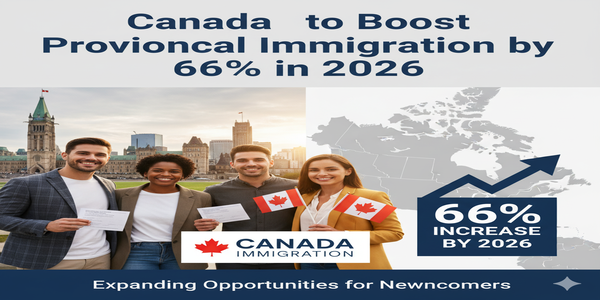
There is a good news for international graduates and other work permit holders in Canada, in order to strengthen regional economies and address ongoing labour shortages, the Government of Canada has announced a 66% increase in immigration through the Provincial Nominee Program (PNP) for 2026.
According to the latest Immigration Levels Plan (2026–2028), 91,500 new permanent residents will be admitted through the PNP next year—up from 55,000 in 2025. The plan also sets a further increase of 67% for 2027, marking a strong rebound after significant reductions made in 2025.
Why the Provincial Immigration Increase Matters
The Provincial Nominee Program allows provinces and territories to select skilled workers who meet their local economic and labour market needs. By nearly doubling the annual PNP target, the federal government is signaling a renewed commitment to helping provinces attract and retain talent outside major urban centers like Toronto, Vancouver, and Montreal.
This expansion will likely benefit temporary residents—especially those on work or study permits—who are already contributing to Canada’s workforce. In particular, post-graduation work permit (PGWP) holders could see greater opportunities to transition to permanent residency (PR) through provincial nominations.
A Boost for PGWP holders and Employers
With most PNP streams designed to select candidates who have worked or studied within a province, the new allocations could make PR pathways more accessible for individuals already living in Canada.
The changes also come at a critical time for employers. With the federal government removing CRS points for arranged employment in Express Entry starting in 2025, PNPs are becoming an even more important tool for companies hoping to retain skilled foreign workers amid persistent labour shortages.
Provincial Adjustments in 2025
The move follows a turbulent year in immigration policy. Earlier in 2025, the government cut PNP targets in half, leading many provinces to temporarily pause or restrict their nomination programs.
The upcoming increase in allocations will allow provinces to reopen and expand their nominee programs, rebalancing Canada’s immigration system after a year of contraction.