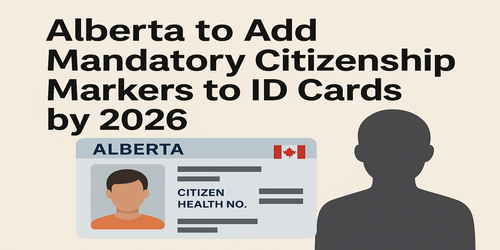
EDMONTON — Alberta is set to introduce mandatory citizenship markers and integrated personal health numbers on all provincial identification cards starting mid-2026, a move the government claims will modernize verification systems but which immigration advocates warn could have serious consequences for international students, temporary foreign workers, and newcomers.
What the New Alberta Citizenship Markers Mean
Under the legislation, Alberta ID cards will begin displaying:
- Citizenship status
- Personal health numbers
- Information normally found on birth certificates
- Driving privileges
The province says the update will come with no added cost for residents and will make it easier to access services such as health care and provincial benefits.
However, critics argue the mandatory citizenship label could create unintended risks for Alberta’s growing immigrant population.
Why Immigration Groups Are Raising Red Flags
Immigration lawyers and advocacy groups warn that the new citizenship marker could visually expose immigration status, allowing employers, landlords, or law-enforcement officers to quickly identify non-citizens. Opponents say this increases the potential for:
- Discrimination against newcomers
- Targeting temporary residents for additional scrutiny
- Privacy breaches
- Misuse of immigration-related information
Many fear the policy could create a two-tier identification system, marking out non-citizens in settings where ID is routinely requested—like job interviews, housing applications, airport checks, or everyday transactions.
Impact on Temporary Foreign Workers and Work Permit Holders
Temporary foreign workers (TFWs) in agriculture, hospitality, trucking, and construction could feel the impact even more:
1. Workplace discrimination
Employers may use citizenship markers to prioritize Canadian citizens and permanent residents, even in situations where doing so would violate employment standards.
2. Barriers in rural Alberta
Many rural work sites require ID checks; visible citizenship details could lead to unfair assumptions about a worker’s rights or qualifications.
3. Data privacy concerns
Embedding health numbers alongside citizenship increases the risk of identity theft in industries where ID is frequently scanned or copied.
Concerns for Permanent Residents and Refugee Claimants
Permanent residents (PRs) could face confusion if their PR status is misinterpreted as temporary residence. Refugee claimants and newcomers awaiting documentation fear even greater stigma.
Immigration groups emphasize that the policy change could have a chilling effect on newcomers’ willingness to interact with authorities, landlords, or employers—potentially destabilizing settlement and integration outcomes.
When Will the New Alberta ID Cards Launch?
If approved, the new ID cards will roll out by mid-2026, giving service providers, businesses, educational institutions, and regulated industries time to adjust.
However, immigrant-serving organizations are urging the province to:
- Provide clear guidelines for employers and landlords
- Implement anti-discrimination protections
- Ensure privacy safeguards for temporary residents
- Coordinate better with federal immigration authorities